
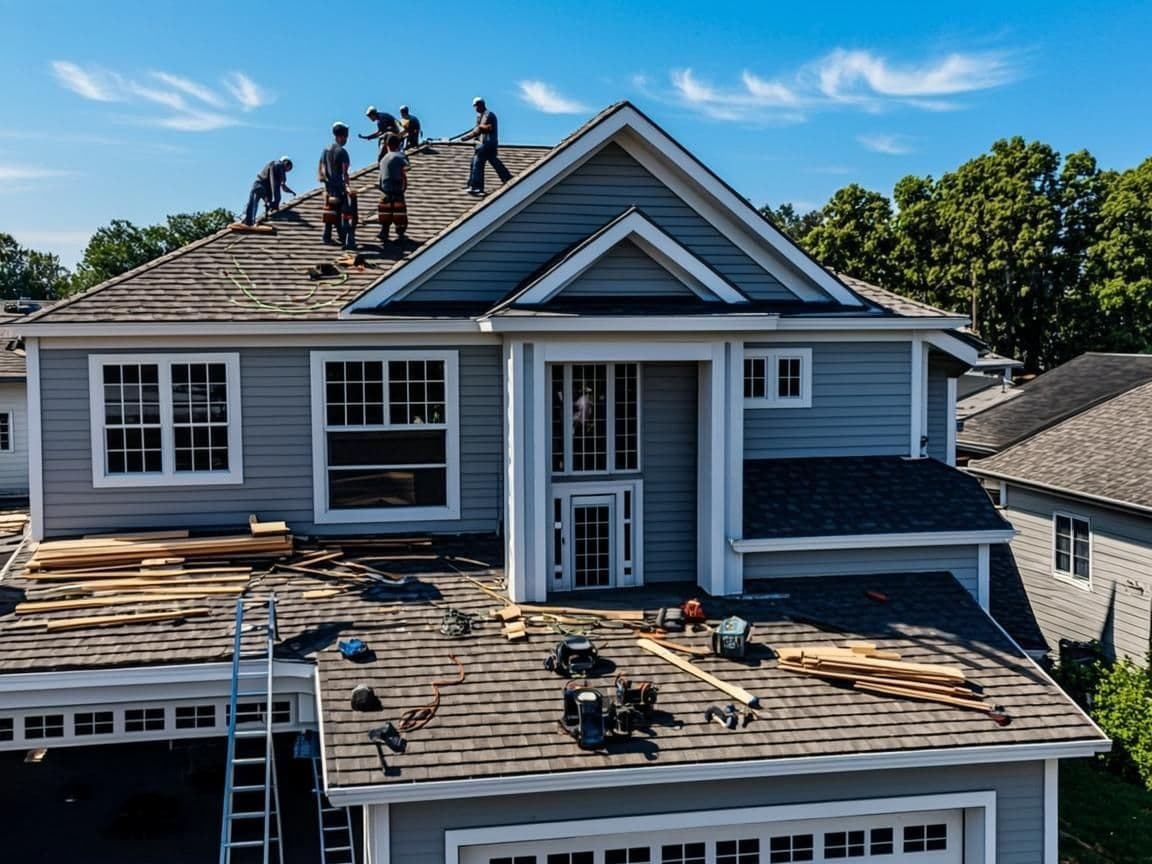
Roof Replacement in NJ: Why Prices Went Up in 2026 and How to Plan
If the last time you priced a new roof was a few years ago, the 2026 numbers will come as a surprise. Roof replacement in NJ costs more this year than it did even last year, and most of the increase traces back to two places: the shingle factory and the jobsite. GAF, the largest shingle maker in the country, raised prices 6 to 9 percent across its lines, and Owens Corning added roughly $8 per square, both effective in the first half of 2026. Those increases land on top of labor, insurance and disposal costs that have also been climbing.
This guide walks through what changed, what a new roof realistically costs in New Jersey right now, and how to plan the project so the surprises stay small. The short version: most asphalt-shingle roof replacements in NJ run $7,000 to $15,000 for an average 1,800 to 2,200 square foot home, while larger or more complicated roofs climb into the $20,000s. Prices vary by town, roof and product line, so treat every range here as a planning figure, not a quote.
Why roof replacement prices went up in 2026
The biggest single change sits at the manufacturer. GAF raised shingle prices 6 to 9 percent across its product lines, and Owens Corning raised prices by about $8 per square, with the increase effective 1 June 2026. A square is 100 square feet of roof, and an average NJ home needs 22 to 35 of them. On a 30-square roof, the Owens Corning increase alone adds around $240 to the material bill before distributor and contractor handling, and a 6 to 9 percent shingle increase adds several hundred dollars more on top of that.
The manufacturers point to asphalt, fuel and freight costs, and those pressures have not eased. Whatever the root cause, the increases compound through the supply chain: the distributor pays more, the roofing supplier pays more, and the number on your written estimate reflects every step. A homeowner who collected quotes in 2024 and compares them with fresh 2026 bids is looking at two different pricing worlds.
Materials are only part of the bill. Skilled roofing labor remains tight in the NY-NJ market, and the costs of running a legal crew keep rising: general liability and workers compensation premiums, dump fees at the transfer station, fuel for trucks and equipment. Coastal storm seasons keep demand for roofers strong across New Jersey, which supports pricing from spring through late fall. None of these forces looks likely to reverse before 2027, so a roof you put off this year will probably not get cheaper next year.
What roof replacement costs in NJ in 2026
Most New Jersey homeowners replacing an asphalt-shingle roof should plan on $4 to $11 per square foot installed. For the average 1,800 to 2,200 square foot home, that lands between $7,000 and $15,000 with architectural shingles, the most common choice in the state. These are the same ranges we publish on our roofing pages, and they hold across most of NJ with local variation.
- Basic 3-tab shingle roof on a simple one-story layout: the lower end of the range.
- Architectural shingle roof on an average NJ home: $7,000 to $15,000 installed.
- Larger, steeper or cut-up roofs, second-story work, or two layers to remove: the $20,000s and beyond.
- Cedar, metal or slate roofing: a different conversation, quoted project by project.
These are market ranges, not a quote. The written estimate you get after an inspection of your actual roof is the only number you can plan around. Homeowners on Staten Island can see a detailed local breakdown, including how bids from different contractors can legitimately differ by thousands of dollars, in our Staten Island roof replacement cost guide.
What changes the price of a new roof
Every roof quote is a stack of variables, and a handful of them move the number more than everything else combined. Before you compare bids, know which lines do the work:
- Roof size, measured in squares of 100 square feet. Bigger roof, proportionally bigger bill.
- Pitch and complexity: steeper roofs and roofs with valleys, dormers and hips take more time, safety gear and material.
- Tear-off: how many layers of old shingles come off before the new roof goes on.
- Decking condition found after tear-off: soft or rotted plywood is the classic budget breaker.
- Shingle grade: 3-tab versus architectural, and any upgraded ventilation or flashing work.
- Permit and disposal: both are real costs in NJ towns and belong on a written estimate.
The one nobody can price in advance is decking. Shingles hide the wood beneath them, and a roof that looks sound from the street can open up to plywood that has been slowly failing for years. That is why careful roofers quote decking by the sheet before work starts, so the conversation happens with numbers in hand. For help choosing the shingle itself, our asphalt vs. architectural shingles comparison breaks down the trade-offs in plain words.
How to plan a roof replacement in 2026
Start with an inspection, not a quote hunt. A proper inspection tells you how much life your current roof has left, whether a repair would carry you another season or two, and what a full replacement would involve. Sometimes the honest answer is that the roof has years left in it, and hearing that early saves you from buying a roof you do not need yet. When replacement is genuinely due, the inspection gives every contractor the same facts, which makes their bids comparable.
Compare written bids line by line, not sales pitch by sales pitch. The lines that matter most: price per square for the shingle system, the per-sheet price for decking replacement, ventilation work, flashing details, cleanup including a magnetic nail sweep, and the warranty terms on both product and workmanship. When two bids differ by thousands of dollars, the difference almost always lives in these lines, and asking about them is how you find out which bid is complete and which one is optimistic.
Budget a contingency of 10 to 15 percent above the quoted number for wood repairs. If the tear-off reveals damage, you want the decision about how to handle it already made, not made under pressure with a tarp on your roof. Financing options exist for homeowners who prefer to spread the cost, and having that decision ready before you sign keeps the project moving either way.
Timing matters less than readiness. Late winter and early spring schedules tend to run shorter, while the weeks after coastal storm season can back up good crews for a while. The season rarely changes the price much; the condition found at tear-off changes it far more. The best plan is to be inspected, quoted and ready to book when the crew has an opening.
How to choose a roofing contractor in NJ
New Jersey requires home improvement contractors to register with the Division of Consumer Affairs, so registration is the floor, not the ceiling. On top of it, verify current general liability and workers compensation insurance certificates sent directly from the insurer, ask for local references from the last year or two, and get every promise in writing, including the workmanship warranty and who stands behind it. A contractor who resists putting a line item in writing is telling you something.
If you are comparing roofers in NJ, our roofing page lays out exactly how we quote, how our crews are equipped and what our workmanship warranty covers. Homeowners in the borough can find the same detail for their market, including coastal considerations, on the Staten Island roofing page.
How The Men With Tools prices a roof
You get a written price after an inspection, not a number scribbled on a business card. Decking is quoted by the sheet up front, so a tear-off surprise is a conversation with numbers you already know, not a bill shock at the end. Our crews work out of showrooms in Staten Island, South Amboy and Summit, which keeps most of New Jersey within reach, and the finished job gets a walkthrough and a cleanup that includes a magnetic nail sweep. If your roof still has honest years left in it, we will tell you that too, because a company that only ever sells replacements is answering its own question.
Frequently asked questions
Why did roof replacement prices go up in 2026?
GAF raised shingle prices 6 to 9 percent and Owens Corning added roughly $8 per square effective 1 June 2026. Distributor, labor, insurance and disposal costs rose alongside them, and steady storm-driven demand in the NY-NJ market supports the new pricing. Together they pushed 2026 bids above what the same roof cost a year or two ago.
How much does roof replacement cost in NJ in 2026?
Plan on $4 to $11 per square foot installed for asphalt shingles. The typical 1,800 to 2,200 square foot NJ home lands between $7,000 and $15,000 with architectural shingles, and larger, steeper or more complicated roofs run into the $20,000s or beyond. A written estimate after an inspection is the only number that counts.
Is it cheaper to replace a roof in the off-season in NJ?
The real off-season advantage is the schedule, not the price. Late winter and early spring tend to have shorter waits for good crews. Prices in NJ do not swing dramatically by season, and the factor that actually moves your final number is the roof condition found at tear-off, which no calendar can control.
How long does a roof replacement take?
Most residential asphalt-shingle replacements in New Jersey take one to three working days for the roof itself, weather permitting. Larger or more complex roofs, or projects that uncover decking repairs, take longer. Cleanup and a final walkthrough with the crew happen at the end of the last day, not weeks later.
